Venture debt offers a powerful alternative, providing the fuel needed to extend your runway without the significant dilution of a priced equity round. However, choosing the right lending partner is critical. The right firm can be a strategic accelerant, while the wrong one can saddle your business with restrictive covenants and financial strain, turning a lifeline into an anchor. Understanding how to navigate this landscape is key to unlocking your company’s full potential.
Key Takeaways
- Venture debt is a loan for venture-backed companies that minimizes equity dilution compared to raising more venture capital.
- Key selection factors include a firm’s industry track record, the flexibility of loan terms (covenants, warrants), and their value as a strategic partner.
- The total cost of venture debt includes interest rates, fees, and equity warrants, which give the lender a small stake in the company’s future success.
- Working with a commercial finance consultant can simplify the selection process, providing access to a vetted network of lenders and expert guidance on structuring the deal.
What is Venture Debt?
Venture debt is a type of loan specifically for growth-stage, venture-backed companies. The British Business Bank defines it as "lending funds to early-stage, high-growth companies that are already supported by venture capital." It’s designed to provide capital between equity funding rounds, helping companies reach critical goals that can lead to a higher valuation in their next raise.
Core Components of a Venture Debt Deal
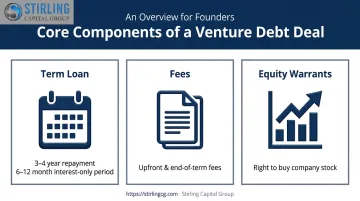
A typical venture debt deal isn't just a simple loan. It usually consists of three main parts that work together to balance risk and reward for both the borrower and the lender.
- Term Loan: A standard loan repaid over 3 to 4 years, often with an initial 6 to 12-month interest-only period to preserve your cash flow.
- Fees: Lenders charge upfront arrangement and end-of-term fees to cover their underwriting and administrative costs.
- Equity Warrants: A contract giving the lender the right to buy a small amount of company stock at a preset price, compensating them for risk.
Key Benefits of Venture Debt for Growth-Stage Companies
Venture debt offers several key advantages over raising another round of VC funding, especially for companies on a strong growth trajectory.
- Minimize Equity Dilution: Avoid selling more equity, allowing founders and existing investors to retain a larger ownership stake in the company.
- Extend Your Cash Runway: Gain an additional 3 to 9 months of operating capital to hit key milestones before your next equity round.
- Access Capital Faster: Secure funding in as little as 6 to 8 weeks, which is significantly faster than a typical multi-month VC equity round.
- Keep Board Control: Debt providers typically don't take a board seat, allowing you to maintain your existing governance structure.
Key Considerations for Choosing a Venture Debt Firm
Choosing the right venture debt partner involves more than just comparing interest rates. The best firms stand out based on their deal structure, reputation, and flexibility as a partner. Choosing the right partner is a strategic decision that requires careful due diligence.
Factor 1: Lender's Track Record and Industry Expertise
Look for a firm with a long, stable history of lending through various economic cycles. A lender that has successfully navigated downturns is more likely to be a steady partner when challenges arise.
Equally important is their experience in your specific industry. A lender who understands the nuances of your industry brings more than capital—they offer a valuable network, relevant insights, and a deep understanding of your business model.
Factor 2: Loan Structure, Terms, and Flexibility
The fine print matters. Scrutinize every detail of the term sheet, including:
- Interest rates (fixed vs. floating)
- Warrant coverage
- Prepayment penalties
- Financial covenants
Covenants are conditions you must meet to avoid defaulting on the loan. These can include maintaining a minimum cash balance or hitting certain revenue targets. For example, some agreements might require you to hold cash equal to 65% of the outstanding principal. Finding a lender with flexible, growth-friendly covenants is crucial to avoid tripping a wire that could restrict your operations.
Factor 3: The Lender's Reputation and Role as a Partner
The best lenders act as partners, not just creditors. How did they treat their portfolio companies during challenging times? The COVID-19 pandemic and the SVB collapse provided a real-world stress test for the industry.
For instance, during the pandemic, SVB deferred principal payments for six months on $2.1 billion of venture debt for over 1,000 startups. After its collapse, the bridge bank honored existing credit facilities. This kind of supportive behavior is a strong indicator of a true partner. Always conduct reference checks with other founders who have worked with the firm to gauge their responsiveness and support.
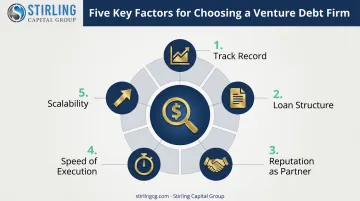
Factor 4: Speed and Certainty of Execution
In a competitive market, moving quickly is a major advantage. A lender with a clear, transparent, and efficient underwriting process signals an experienced and reliable organization. Ask potential partners about their typical timeline from term sheet to funding and what they need from you to ensure a smooth process.
Factor 5: Scalability and Follow-On Potential
Your capital needs will grow as your business scales. Choose a partner with the capacity and willingness to provide future capital. A firm that can grow with you becomes a long-term strategic resource, saving you the time and effort of finding a new financing partner at each stage of growth.
Navigating these factors requires deep market knowledge. A trusted capital advisor can help you compare lenders, scrutinize term sheets, and connect you with the right venture debt partner for your growth stage.
Why Partner with a Commercial Finance Consultant?
The private debt market is complex and fragmented. For a busy founder or CFO, identifying and comparing all available lending options is a daunting, time-consuming task.
While the market has grown—with US venture debt value nearly doubling from $27.4 billion in 2023 to $53.3 billion in 2024—fewer deals are being done. This signals a more selective lending environment where a commercial finance consultant becomes an invaluable guide.
A firm like Stirling Capital Group acts as an expert advisor, simplifying the process and connecting you with the right capital for your specific needs. Instead of approaching lenders one by one, you gain an advocate who understands the entire market.
Here are the key advantages of this approach:
- Access a broad, curated network of lenders. Consultants provide instant connections to dozens of capital sources—like Stirling Capital Group's network of over 60 private lenders—saving you from endlessly shopping your deal.
- Leverage expert negotiation and deal structuring. An experienced advisor structures terms, from covenants to warrant coverage, that align with your growth plan instead of a generic lender template.
- Benefit from a streamlined and accelerated process. Because firms like Stirling Capital Group can pre-qualify and pre-underwrite for their partners, the funding timeline is significantly shorter, giving you a competitive edge.
Conclusion
Choosing a venture debt firm is a strategic decision that extends beyond the numbers on a term sheet. It's about finding a financial partner who understands your vision, offers flexible and supportive terms, and is committed to your long-term success.
The right partner provides more than just capital—they offer stability, industry expertise, and the flexibility needed to navigate the challenges of a growing business. Working with a capital advisor can help you confidently evaluate your options and secure a deal structured to propel your growth.
Frequently Asked Questions
What are venture debt firms?
Venture debt firms are specialized non-bank lenders that provide loans to venture-backed startups and growth-stage companies. They offer a way to secure capital with less equity dilution than a traditional venture capital round.
How much does venture debt cost?
The cost includes an annual interest rate (often 7-12%), upfront fees, and equity warrants. These warrants allow the lender to purchase a small percentage of company stock, providing upside in return for their risk.
What is the difference between venture debt and venture capital?
Venture debt is a loan that must be repaid and involves minimal equity dilution. Venture capital is an equity investment where you exchange a significant ownership stake (and often a board seat) for capital.
When is the right time for a company to consider venture debt?
The ideal time is after a significant equity round (e.g., Series A) when you have proven product-market fit. Companies use it to scale operations or extend their financial runway before the next funding round.
What are equity warrants in a venture debt deal?
Warrants are contracts that give the lender the right to purchase a small amount of company stock at a pre-agreed price in the future. This allows the lender to participate in the company's success as a return for taking on risk.