

What if you could access a significant portion of that wealth without selling your business or giving up control?
This is where a leveraged recapitalization comes in. It’s a powerful financial strategy that allows owners to unlock the value they’ve built, providing personal liquidity while they continue to lead their company’s growth. This article will break down what a leveraged recapitalization is, its key benefits, the most common strategies, and how to know if it’s the right move for your business.
Key Takeaways
- A leveraged recapitalization is a strategy where a company takes on new debt to fund a large cash payout to its owners.
- The primary benefits are generating personal liquidity for owners and diversifying wealth while maintaining majority ownership and control.
- Common strategies include Dividend Recapitalizations, Leveraged Share Repurchases, and Minority Recapitalizations.
- The ideal company for this strategy has a history of stable cash flows, low existing debt, and a strong management team.
- While powerful, this approach increases financial risk due to higher debt, requiring careful analysis before moving forward.
What Is a Leveraged Recapitalization?
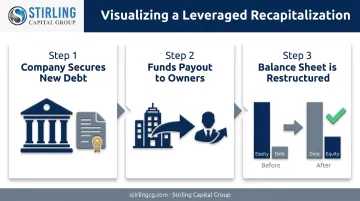
A leveraged recapitalization is a corporate finance strategy where a company takes on new debt to make a substantial cash payment to its shareholders. The company’s balance sheet is restructured—or "recapitalized"—by swapping a portion of its equity for debt.
The key distinction is that this new debt is used to fund a payout to the owners, not for operational purposes like buying equipment or funding research and development.
Think of it like taking out a mortgage on a paid-off house. The business itself takes on the new debt obligation, while the owners receive the cash proceeds.
This strategy allows you to convert a portion of your illiquid business equity into cash—without having to sell the company.
Why Consider a Leveraged Recapitalization? Key Benefits for Owners
While every situation is unique, business owners typically pursue a leveraged recapitalization for a few primary reasons. The benefits go far beyond just a simple cash infusion.
Achieve Partial Liquidity and Diversify Wealth
For many entrepreneurs, their business isn't just their largest asset—it's practically their only major asset. This concentration creates significant personal financial risk. A leveraged recapitalization allows you to "take some chips off the table" and convert paper wealth into tangible cash.
According to research from EY, a family business interest is often the owner's largest asset, making diversification a central part of sound financial planning. This liquidity can be used to:
- Diversify your personal investment portfolio.
- Fund estate planning or generational wealth transfers.
- Pursue other business ventures or personal projects.
- Simply create a cash cushion for personal financial security.
Maintain Majority Control
Perhaps the most compelling benefit is gaining liquidity without selling your company. Traditional exit strategies, like a sale to a strategic buyer or private equity firm, usually mean giving up control. A leveraged recapitalization, however, allows owners to retain their majority equity stake and continue steering the company’s future. You get financial freedom while staying in the driver's seat.
Optimize Your Capital Structure
For mature companies with little to no debt, a recapitalization can introduce leverage to make the balance sheet more efficient. By swapping low-cost debt for equity, you can potentially increase the return on equity (ROE) for the remaining shareholders.
While this strategy adds risk, it can be a smart way to enhance shareholder value in a stable, cash-flowing business.
Common Leveraged Recapitalization Strategies
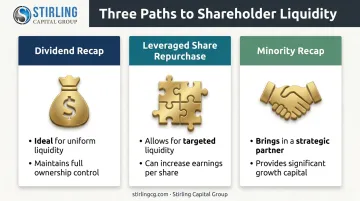
"Leveraged recapitalization" is an umbrella term. The specific structure of the deal can be tailored to fit the unique goals of the business and its owners. Here are the three most common approaches.
Dividend Recapitalization
This is the most straightforward form of a leveraged recap. The company secures a new loan and uses the cash to issue a large, one-time dividend to all shareholders on a pro-rata basis.
- The company borrows funds and distributes the cash directly to all shareholders on a pro-rata basis.
- This is ideal when all owners want liquidity without altering their existing ownership percentages.
- Its primary advantage is simplicity, making it straightforward to execute and understand.
- The main drawback involves complex tax implications that require professional tax planning.
Leveraged Share Repurchase
In this strategy, the company uses borrowed funds to buy back stock from some or all of its owners. Instead of a dividend, the company makes a formal offer to repurchase its own shares.
- The company uses borrowed funds to buy back stock from owners who choose to sell.
- It works well when owners have different goals, such as allowing a founder to exit while others increase their stake.
- This provides a liquidity path for exiting shareholders while concentrating ownership for those who stay.
- Repurchases are more complex to structure, as they require a formal share valuation.
Minority Recapitalization
A minority recap is a hybrid strategy where a company sells a non-controlling equity stake (typically 10-49%) to an outside investor, like a private equity firm. This transaction is often paired with new debt to maximize the payout to the original owners.
- An outside investor buys a non-controlling equity stake, providing capital to pay out existing owners.
- This strategy suits owners who want significant liquidity plus a strategic partner to accelerate growth.
- It provides access to both fresh capital and the operational expertise of a new partner.
- Owners must give up a portion of future upside and add an outside voice to major decisions.
Is a Leveraged Recapitalization Right for Your Business?
This strategy is a powerful tool, but it's not for every company. Because it involves adding significant debt to the balance sheet, it requires a strong and stable financial foundation.
Profile of an Ideal Candidate Company
Lenders look for specific characteristics to ensure the business can comfortably service its new debt obligations. The ideal candidate typically has:
- A history of strong, predictable cash flow: This is the most critical factor. The business must generate enough cash to cover the new, higher debt payments.
- A solid market position: A defensible niche, loyal customer base, or strong brand helps ensure future stability.
- A proven management team: Lenders are betting on the existing team to continue running the business effectively.
- Low existing leverage: A company with little to no debt on its balance sheet is in the best position to take on more.
- Tangible assets: While not always required, assets that can serve as collateral can strengthen the financing package.
Key Factors and Risks to Evaluate
Before proceeding, you must conduct a thorough analysis of both your goals and the company’s financial health.
- Define your objectives clearly. Are you seeking personal liquidity, facilitating an ownership transition, or bringing on a partner for growth? Your goals determine the deal structure.
- Stress-test your financial health. Perform rigorous financial modeling to see if the business can handle increased debt payments if revenue dips by 10% or 20%. Understanding this breaking point is crucial.
- Evaluate current market conditions. The availability and cost of debt are heavily influenced by interest rates and lenders' risk appetite. Timing can significantly impact the terms you receive.
- Acknowledge the increased financial risk. The primary downside is that a higher debt load makes the company more vulnerable to economic shocks. As rating agencies like Fitch have noted, dividend recaps increase leverage and reduce financial flexibility.
Navigating the Process with an Expert Partner
The path to a successful leveraged recapitalization is complex. It involves preparing a detailed financial package, identifying and approaching the right lenders, negotiating terms, and managing the closing process.
This is where many business owners partner with a commercial finance consultant. A firm like Stirling Capital Group provides access to a wide network of over 65 private lenders, debt funds, and institutional investors—not just a single bank.
Our role is to understand your specific goals and then structure a deal that aligns with them, ensuring you connect with the right capital partner on the right terms.
Unlocking Your Wealth Without Selling Your Company
A leveraged recapitalization is a powerful tool for business owners looking to unlock the equity value they've built without ceding control. This strategy provides the financial flexibility to diversify personal assets, plan for the future, and secure your financial legacy—all while you continue to lead your company forward.
The right approach—whether a dividend, a share repurchase, or a minority recap—depends on your specific goals and your company’s financial strength. Partnering with a capital advisory firm is the critical first step to assess your options and structure a recapitalization that aligns with your unique situation.
Frequently Asked Questions
What is a leveraged recapitalization?
It's a strategic change to a company's debt and equity mix. A business takes on new debt to fund a large cash dividend or share buyback, letting owners access equity value without selling control.
Why consider a leveraged recapitalization?
The main benefits are allowing owners to gain personal liquidity and diversify their wealth while retaining majority control of their business.
How does a leveraged recapitalization differ from a leveraged buyout?
In a recapitalization, the existing owners keep control of the company. In a leveraged buyout (LBO), an outside party (like a private equity firm) buys a controlling stake, and the original owners typically exit.
What are the primary risks of a leveraged recapitalization?
The primary risk is financial. The new debt requires significant cash flow for interest payments, which can strain the company and make it more vulnerable to business downturns or economic shocks.
What kind of company is a good candidate for a leveraged recapitalization?
The best candidates are mature, stable businesses with predictable cash flow, low existing debt, and a strong market position. An experienced advisor can help determine if it's the right fit for your company.