DIP financing is a loan extended to a company after it has filed for Chapter 11 protection. While the term is common in turnaround circles, the process from the borrower's perspective is often a black box. This guide will demystify DIP financing, explaining how it works, what lenders look for, and how to successfully secure the capital you need to navigate restructuring and build a viable future.
Key Takeaways
- A Financial Lifeline: DIP financing provides essential liquidity for payroll, suppliers, and operating costs during a Chapter 11 reorganization.
- Court-Approved Priority: Lenders receive "superpriority" status from the bankruptcy court, ensuring they are repaid before most other creditors.
- Not a Bailout: This is expensive, highly structured debt with strict terms and oversight, designed solely to fund a viable turnaround plan.
- Lender Scrutiny is Intense: Success depends on strong collateral, a credible reorganization plan, and a capable management team.
What is Debtor-in-Possession (DIP) Financing?
Debtor-in-Possession (DIP) financing is new capital provided to a company after it has filed for Chapter 11 bankruptcy protection. It's designed to provide immediate liquidity to fund essential operating expenses, such as:
- Funding payroll
- Paying suppliers
- Covering other critical operating costs
By stabilizing the business, this funding builds confidence among customers, employees, and creditors that there is a viable path forward.
What makes DIP financing unique is its "superpriority" status. Granted by the bankruptcy court, this status ensures that DIP lenders are repaid before almost all pre-bankruptcy creditors, unsecured creditors, and even administrative claims. This special protection is critical for convincing new lenders to provide capital to a company already in financial distress.
Why DIP Financing is a Critical Lifeline for Distressed Businesses
For a company in Chapter 11, cash is oxygen. DIP financing provides the funds needed to maintain day-to-day operations, prevent a complete shutdown, and develop a formal plan of reorganization. Without it, the consequences are often severe.
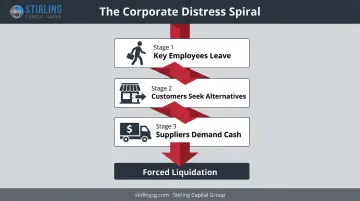
A cash shortage mid-reorganization can trigger a downward spiral:
- Key employees leave for more stable jobs.
- Nervous customers take their business elsewhere.
- Critical suppliers demand cash on delivery, further straining liquidity.
This situation often forces the company from a Chapter 11 reorganization into a Chapter 7 liquidation, where assets are sold off and shareholders are typically wiped out.
Securing a DIP financing facility is a crucial first step in a successful turnaround. It signals to the court, creditors, and other stakeholders that the business has a credible strategy and the resources to execute it. In fact, a study of large public companies found that 77% of debtors with DIP financing successfully emerged from bankruptcy, compared to only 43% of those without it.
How the DIP Financing Process Works: A Borrower's Guide
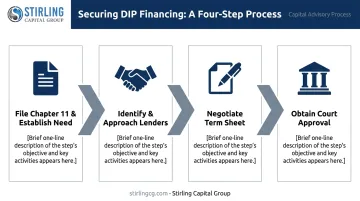
Securing a DIP loan is a structured, court-supervised process. It involves identifying the need for funds, preparing a detailed plan, finding the right lenders, negotiating terms, and obtaining final approval from the bankruptcy court.
Step 1: Filing for Chapter 11 and Establishing the Need
The process begins the moment a company files for Chapter 11. The borrower and their advisors must immediately develop a granular cash flow forecast, typically known as a 13-week cash flow model.
This document is the cornerstone of the financing request. It projects weekly cash inflows and outflows to prove the need for funding, detail how the money will be used, and show how it will stabilize the business.
Step 2: Identifying and Approaching Potential DIP Lenders
Traditional banks are often hesitant to lend to companies in bankruptcy. DIP financing is typically provided by more specialized sources:
- Existing Secured Lenders: The company's pre-bankruptcy lenders are the most common source, as they have a vested interest in a successful reorganization to protect their existing investment.
- Hedge Funds and Private Credit Funds: These specialized funds focus on distressed-debt situations and have the expertise to underwrite the risks involved.
A well-prepared financing request is essential. It must include the 13-week cash flow model, a clear summary of available collateral (assets that can secure the loan), and the key elements of the company’s reorganization strategy.
Step 3: Negotiating the DIP Term Sheet and Loan Agreement
Once a potential lender is engaged, the next step is negotiating the terms. Key points of discussion include:
- Interest Rate and Fees: DIP loans are expensive. Pricing is often a floating benchmark rate (like SOFR) plus a significant margin, along with upfront, exit, and unused commitment fees.
- Loan Amount and Maturity: The loan must be large enough to fund the company through the entire restructuring process.
- Covenants: These conditions require the borrower to meet budget targets, financial metrics, and specific case milestones (e.g., filing a reorganization plan by a set date).
- Liens and Priority: Lenders seek "priming liens" for priority over existing creditors or use a "roll-up" structure to pay off pre-bankruptcy debt and elevate its status.
Step 4: Obtaining Bankruptcy Court Approval
The final step is getting the court's permission. The proposed DIP financing is presented to the bankruptcy court as part of a "first-day motion."
The court reviews the terms to ensure they are fair, reasonable, and in the best interest of the bankruptcy estate. The judge must be convinced the loan is necessary and offers a better path forward than the alternatives.
Key Factors That Determine DIP Financing Success
Lenders don't approve DIP loans lightly. They evaluate several critical factors to gauge the risk and potential for a successful turnaround. Borrowers must present a compelling case in each of these areas.
Quality and Availability of Collateral: Lenders scrutinize all assets—receivables, inventory, real estate, and IP—to ensure the loan is secured. Unencumbered assets not pledged to other lenders are especially valuable and provide significant negotiating leverage.
Viability of the Business Plan: Lenders invest in a recovery, not just assets. Borrowers must present a credible, data-backed plan to fix operations, return to profitability, and exit bankruptcy. Vague or unrealistic proposals are immediately rejected.
Strength of the Management Team: The leadership team is under a microscope. Lenders must see a capable, experienced team that can make tough decisions. A team that has already identified core problems and started developing solutions is a major plus.
Proposed Budget and Use of Funds: The 13-week cash flow model must be detailed, realistic, and defensible. Lenders require a clear accounting of how the loan will be used to stabilize operations, preserve asset value, and fund the reorganization.
Cooperation from Existing Lenders: The stance of pre-bankruptcy secured lenders is crucial. If they support the DIP financing (or provide it themselves), court approval is much smoother. Opposition from a major creditor can derail the entire request.
Common Misconceptions and Risks of DIP Financing
While essential, DIP financing comes with significant risks and is often misunderstood. It is not a simple bailout that forgives past mistakes.
The primary risks for borrowers include:
- High Costs and Strict Terms: DIP financing is expensive debt with high interest rates, substantial fees, and tight controls designed solely to fund a supervised path to recovery.
- Restrictive Covenants: Lenders often gain significant control over business operations. As noted by Clifford Chance, loan milestones can reduce management’s flexibility and force decisions on the lender's schedule.
- Failed Reorganization: If the business fails to recover and defaults, the result is often swift liquidation. The lender's superpriority status ensures they are repaid first, leaving little for other stakeholders.
The Role of a Financial Consultant in Securing DIP Financing
For a management team already under immense pressure, navigating the world of specialized DIP lenders is a complex and time-consuming challenge. This is where a commercial finance consultant can become a strategic partner.
An experienced consultant helps the borrower prepare a compelling, institutional-quality financing request. They will typically:
- Pressure-test the 13-week cash flow model
- Advise on the reorganization story
- Ensure the entire package meets the high standards of sophisticated lenders
Beyond preparing the package, a firm like Stirling Capital Group provides direct access to a broad network of capital providers. With relationships with over sixty private lending sources, we connect borrowers with institutional and specialty finance groups that have an appetite for DIP financing.
By running a competitive process, we help ensure our clients secure the necessary capital on the best possible terms, significantly improving their chances of a successful reorganization.
Frequently Asked Questions
What is debtor-in-possession (DIP) financing?
DIP financing is a special loan for companies in Chapter 11 bankruptcy. A court must approve the funds, which are used to maintain operations during the company's restructuring.
What are the requirements for debtor-in-possession financing?
Key requirements include filing for Chapter 11, proving an operational need with a detailed budget, providing sufficient collateral to secure the loan, and presenting a credible reorganization plan.
How is DIP financing different from a regular business loan?
The main differences are that DIP financing requires bankruptcy court approval and gives the lender "superpriority" status. This status means the DIP lender is repaid ahead of almost all other existing creditors.
Who provides DIP financing?
DIP loans usually come from a company's existing lenders or specialized private credit and hedge funds that focus on distressed companies. Traditional banks rarely provide this type of financing.
What happens if a company defaults on DIP financing?
A default typically allows the DIP lender to seize the company's assets and force a liquidation under Chapter 7 bankruptcy. The lender's superpriority status ensures they are repaid first from the proceeds.