

An Investor’s Guide to Mezzanine Bridge Loans
You’ve found the perfect acquisition—a commercial property in a prime location, an undervalued competitor, or a chance to buy out a partner. The opportunity is golden, but it’s also time-sensitive.
The problem? You have a funding gap, and the senior lender’s offer doesn’t cover the full amount. Traditional banks move too slowly, and their rigid requirements can’t accommodate the deal's structure.
When speed and flexibility are critical, a standard loan won’t cut it. This is the exact scenario where a mezzanine bridge loan becomes a powerful tool. It blends the rapid execution of a bridge loan with the creative capital structure of mezzanine debt.
This guide will demystify the mezzanine bridge loan, explaining what it is, when it’s the right choice, and how to select the best lender to help you seize your next big opportunity.
Key Takeaways
- Mezzanine bridge loans blend short-term bridge funding with subordinated debt, sometimes including equity.
- They fill funding gaps in time-sensitive acquisitions when senior financing is insufficient.
- Their subordinate position creates higher risk, resulting in higher interest rates and fees.
- Lender selection should prioritize expertise, speed, and flexibility over just the cost.
Deconstructing the Components: Bridge vs. Mezzanine Financing
To understand the hybrid, you first need to understand its parts. A mezzanine bridge loan combines two distinct types of financing: the bridge loan and the mezzanine loan. Each serves a different purpose and holds a different position in the capital stack.
What is a Bridge Loan?
A bridge loan is a short-term financing tool used to “bridge” a temporary funding gap. According to the U.S. Office of the Comptroller of the Currency (OCC), these loans generally have terms of up to three years and are put in place until an asset is sold or permanent financing is secured.
The primary advantages of a bridge loan are:
- Fast closing: These loans can be secured much faster than traditional financing.
- Flexible underwriting: Lenders focus more on the collateral's value than a borrower's perfect credit history.
A classic example is an investor using a bridge loan to purchase a new commercial building before they’ve sold their existing one. The loan provides the immediate capital needed to close the deal, and it’s paid off once the old property sells.
What is Mezzanine Financing?
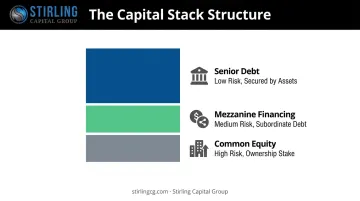
Mezzanine financing is a hybrid of debt and equity. It’s a layer of capital that sits between senior debt (like a bank loan) and common equity in the capital stack. Because it's subordinate to the senior lender, it carries more risk. If the borrower defaults, the senior lender gets paid back first.
To compensate for this higher risk, mezzanine lenders charge higher interest rates and often include an “equity kicker.” This feature, such as warrants or a conversion option, gives the lender a small piece of ownership or the right to share in the company's future profits. This structure makes it a popular tool for growth, acquisitions, and buyouts.
Key Differences at a Glance
Here’s a simple breakdown of how these two financing types compare:
| Feature | Bridge Loan | Mezzanine Financing |
|---|---|---|
| Position in Capital Stack | Typically Senior | Subordinate to Senior Debt |
| Term Length | Short-term (up to 3 years) | Medium-term (typically 5-7 years) |
| Primary Repayment | Sale of an asset or refinancing | Business cash flow or an equity event |
| Cost & Interest Rate | Moderate | High, often with an equity kicker |
| Collateral | Secured by the physical asset | Lien on company assets/shares |
What Is a Mezzanine Bridge Loan? The Hybrid Solution
Imagine the total cost of your project as a glass of water.
- Your Equity is the first layer of water you pour in at the bottom.
- The Senior Loan from a bank or primary lender fills the glass most of the way up.
- The Mezzanine Bridge Loan is the final pour that tops it off, filling that crucial gap between the senior loan and the total amount needed.
Because of its subordinate position and the speed required, this type of financing comes at a premium. The cost structure is often more complex than a simple interest rate. According to a 2025 Pepperdine University survey of private capital markets, mezzanine debt costs can include:
- Cash-Pay Interest: A standard interest rate paid monthly or quarterly. Median rates often range from 8.5% to 14%.
- Payment-in-Kind (PIK) Interest: This is deferred interest that accrues and is added to the loan balance instead of being paid in cash. This helps preserve cash flow during the project.
- Equity Kicker: A share of the upside to compensate the lender for their risk.
Key Scenarios: When Does a Mezzanine Bridge Loan Make Sense?
This specialized loan isn’t for every situation. It excels in high-stakes scenarios where speed, leverage, and creative structuring are essential for success.
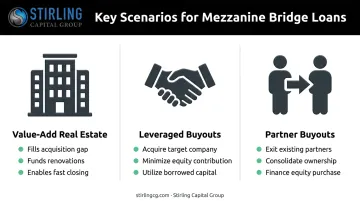
Value-Add Real Estate Acquisitions
An investor identifies an underperforming commercial property they can acquire and renovate. The plan is to increase its value by upgrading units, improving common areas, and raising rents.
A senior lender, however, will only finance a portion of the purchase price based on its current, lower value.
A mezzanine bridge loan can provide the funds to cover the acquisition gap and the renovation budget. Once the property is stabilized and generating higher income, the investor can repay the mezzanine bridge loan by refinancing the project with a larger, long-term conventional mortgage.
Leveraged Buyouts or Management Buyouts
A private equity firm or a company’s management team wants to acquire a business. The senior debt package they’ve secured is substantial but still falls short of the full purchase price.
Crucially, the deal must close quickly to avoid being lost to another bidder.
The mezzanine bridge loan provides the critical funding gap to close the deal, allowing the buyout to proceed. The loan is typically repaid through the company's future cash flows or a subsequent recapitalization once the new ownership is in place.
Shareholder or Partner Buyouts
One business partner needs to buy out another, often due to a disagreement, retirement, or change in strategy.
The buyout requires a significant amount of immediate liquidity to complete the transaction and prevent a forced sale of the business.
A mezzanine bridge loan offers a rapid infusion of capital to facilitate the buyout. This allows the remaining partner to consolidate ownership and stabilize the company before securing long-term financing to replace the bridge loan.
How to Choose the Right Mezzanine Bridge Loan and Lender
Navigating the private lending market for a mezzanine bridge loan can be complex. Success depends on finding the right partner, not just the lowest rate. Here’s a practical guide to making the right choice.
Step 1: Clearly Define Your Capital Need and Exit Strategy
Before you approach any lender, you must have a rock-solid plan. Be prepared to articulate:
- The exact amount of capital needed.
- A detailed use of funds.
- A credible and well-documented exit strategy.
Your exit is how you’ll repay the loan. Common exits include refinancing with a senior lender, selling the asset, or bringing in new equity partners. A clear exit plan gives lenders the confidence to invest.
Step 2: Evaluate the Lender, Not Just the Loan
The cheapest offer isn’t always the best. When evaluating lenders, look beyond the interest rate. Ask critical questions:
- Do they have expertise in your industry? A lender who understands your real estate asset class or business sector can provide more value and structure a better deal.
- Can they close quickly? Ask for references and case studies to confirm a proven track record of reliable and fast execution.
- How flexible are they? The best lenders are creative problem-solvers who can customize terms to fit your unique situation, not force you into a one-size-fits-all box.
Step 3: Scrutinize the Term Sheet
The interest rate is just one part of the deal. Pay close attention to other critical terms that can significantly impact the overall cost and flexibility of the loan:
- Origination fees and other closing costs.
- Prepayment penalties or exit fees.
- The structure of any equity kicker.
- Default provisions and remedies.
Step 4: Partner with a Commercial Finance Consultant
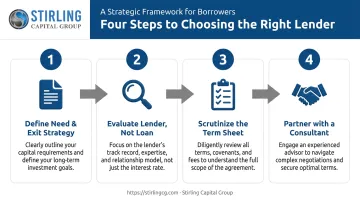
The private lending world is fragmented and opaque. Instead of going it alone, consider partnering with a commercial finance consultant. A firm like Stirling Capital Group acts as a strategic advisor, not a direct lender.
This advisory approach offers several advantages:
- Saves time by leveraging an extensive network—in Stirling’s case, access to over 60 private lenders—to find the ideal match for your project.
- Creates a competitive environment among lenders to help you secure better terms.
- Provides expert guidance to navigate complex negotiations from start to finish.
Frequently Asked Questions
What is the difference between a bridge loan and a mezzanine loan?
A bridge loan is typically short-term senior debt secured by an asset, used to cover a temporary funding gap. Mezzanine financing is longer-term subordinate debt that sits below senior debt and often includes an equity component to compensate for higher risk.
What is a mezzanine bridge loan?
It is a hybrid, short-term, subordinate loan used to fill a capital gap in time-sensitive transactions. It provides the final piece of funding needed to close a deal before long-term financing is arranged or an asset is sold.
Who is an ideal candidate for a mezzanine bridge loan?
The ideal candidate is an experienced investor or business owner with a clear, credible exit strategy. They need to close a deal quickly but have a funding gap between the senior lender’s offer and the total capital required.
What are the typical interest rates for mezzanine bridge loans?
Rates are much higher than bank loans due to the increased risk. The total cost often includes cash-pay interest (8.5%-14%), PIK interest, and an equity component. Lender returns typically fall in the 12%-17% range, according to data from CAIA.
What does a successful exit strategy for a mezzanine bridge loan look like?
The most common exits are refinancing with a conventional long-term loan once the property or business is stabilized, selling the asset for a profit, or securing a capital infusion from new equity partners.